Nikon Zf + Voigtländer 40mm in Oxford: street photography with a camera that actually makes you want to go outside
Oxford is ridiculous, in the best way. One minute you’re walking past a 900-year-old wall that looks like it’s seen several plagues and at least one questionable student fancy-dress theme. The next, you’re staring into a restaurant window where neon characters glow like a late-night promise you definitely shouldn’t keep on a Tuesday.
It’s a city built for street photography because it’s always doing something. Light ricochets off stone, people appear and vanish through archways, and reflections turn the pavement into a second scene layered on top of the first. Which is exactly why the Nikon Zf and a Voigtländer 40mm make such a dangerous combination.
Not “dangerous” like a stuntman. More like “dangerous” in the way you suddenly start taking the long route home because you’ve convinced yourself the next corner is going to give you a masterpiece.
Why the Nikon Zf works for street photography in Oxford
Street photography is less about gear and more about being awake to what’s happening. But the camera matters in one specific way: it either helps you stay present, or it turns the whole thing into a small admin job.
The Nikon Zf sits firmly in the first camp.
It feels like a camera, not a device
Oxford already has enough screens. The Zf’s dials and physical controls bring you back into the moment. You set your shutter speed, nudge your ISO, and you’re off. No menu archaeology. No “just one more setting” spiral.
For street work, that matters. You want your head up, not buried.
It’s discreet enough to blend in
Oxford can be busy and performative, but it also has quiet pockets where you can photograph without becoming a thing. The Zf doesn’t scream “press photographer”. It looks like a classic camera, which tends to put people at ease, or at least makes you seem less like you’re about to livestream their sandwich.
It plays nicely with manual focus
This is the big one if you’re pairing it with a Voigtländer.
Manual focus on mirrorless is genuinely enjoyable when you’ve got tools like focus peaking and magnification. You can be quick when you need to be, and deliberate when the scene calls for it. That balance is basically the entire street photography mindset.
Why a Voigtländer 40mm is the sweet spot for street
If 35mm is the classic street focal length and 50mm is the “I like my personal space” option, 40mm is the quiet genius in the middle.
It gives you:
A natural perspective without feeling wide
Enough context for Oxford’s architecture and atmosphere
Enough compression to isolate moments without shouting about it
In a city like Oxford, that middle-ground is gold. Streets are narrow, buildings are tall, light is dramatic, and scenes often happen in layers. 40mm lets you work with that complexity without fighting it.
And there’s something else with Voigtländer lenses specifically: they often render in a way that feels a bit more… human. Not “clinical-perfect”. More like “this has mood”.
Which is exactly what Oxford deserves.
The photos: reflections, neon, winter light, and the theatre of everyday life
These images are a perfect example of what I’m talking about. Oxford gives you a stage, and the Zf + 40mm lets you photograph it without overcomplicating things.
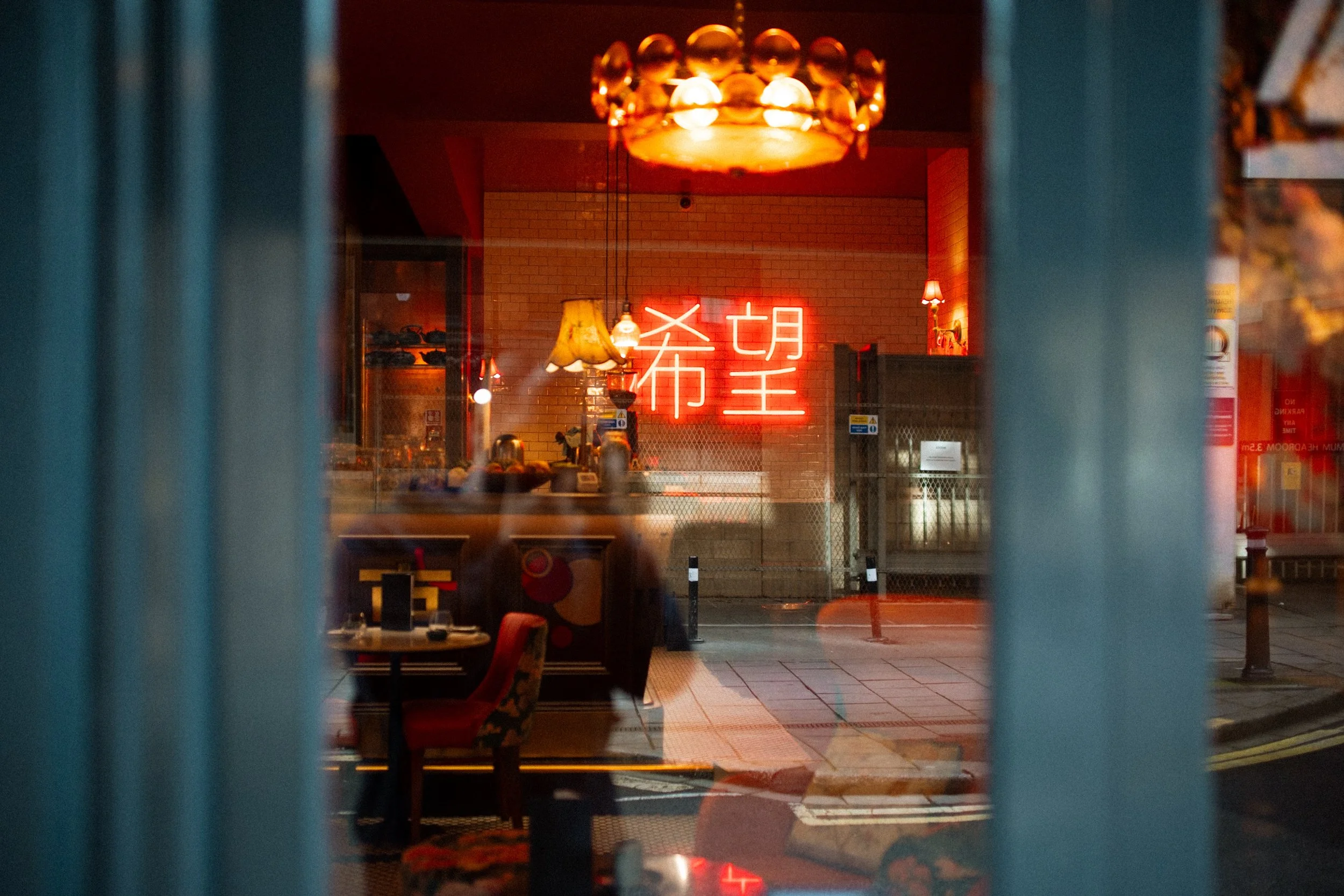
1) Neon through glass: street photography in layers
That first frame, shot through a window, is the kind of scene Oxford quietly hands you when you’re not rushing.
You’ve got the warm interior lights, the neon characters glowing red, and reflections from the street creating this ghosted overlay. There’s even a hint of movement in the foreground, like someone passing through the story without stopping to announce themselves.
This is where the 40mm shines: it’s tight enough to simplify the frame, but wide enough to keep the environment and reflections doing their thing.
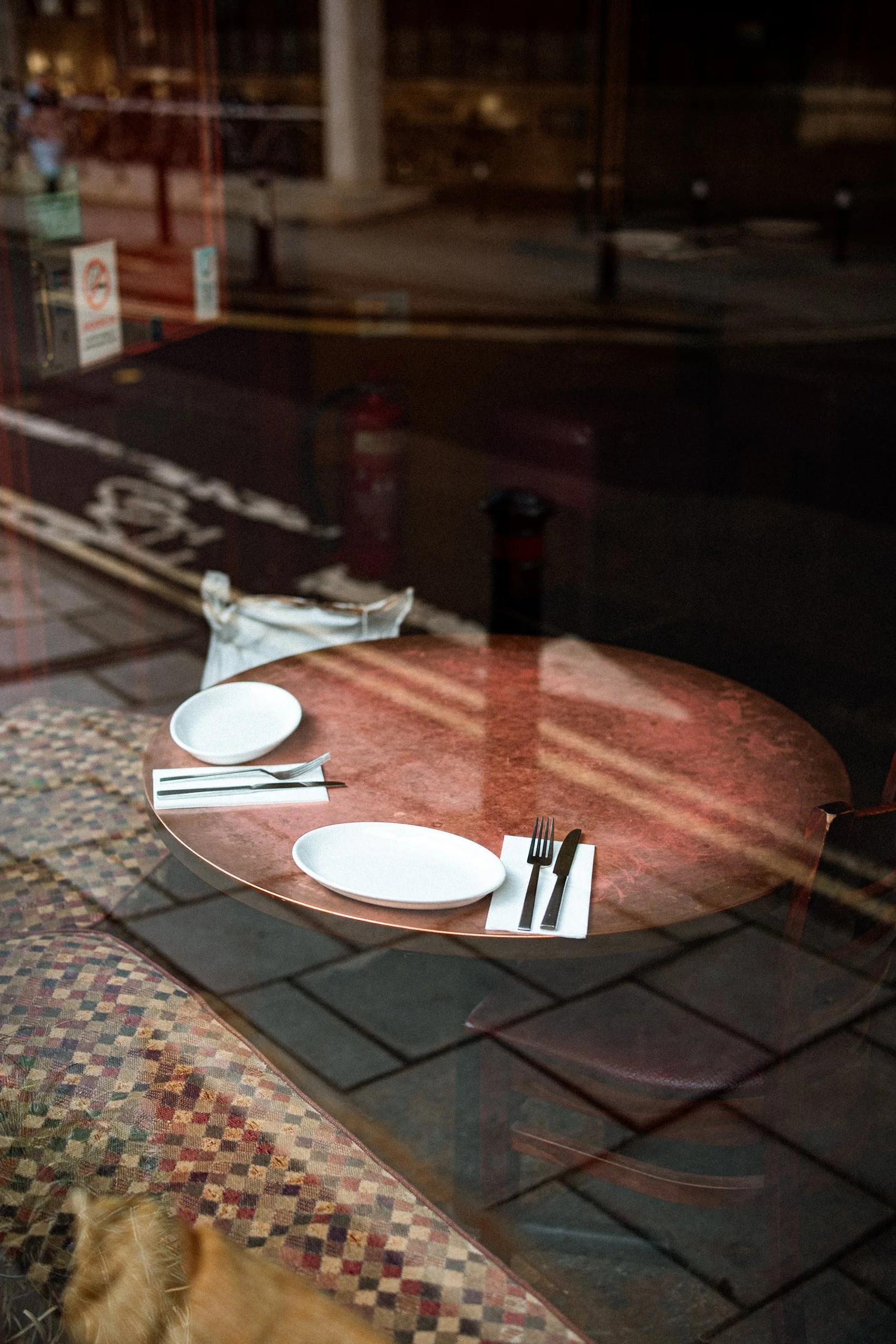
2) The empty table: anticipation and stillness
The second image feels like a paused scene.
A table set for two, plates waiting, cutlery straightened, and the outside world bleeding into the glass. It’s quiet, but not empty. It’s got that “someone will be here in a minute” feeling.
Street photography doesn’t always need faces. Sometimes it’s about the evidence of people, the atmosphere they leave behind, and the suggestion of a story you’re not going to fully explain.
Oxford is brilliant for this because it’s full of small moments like this tucked behind glass.
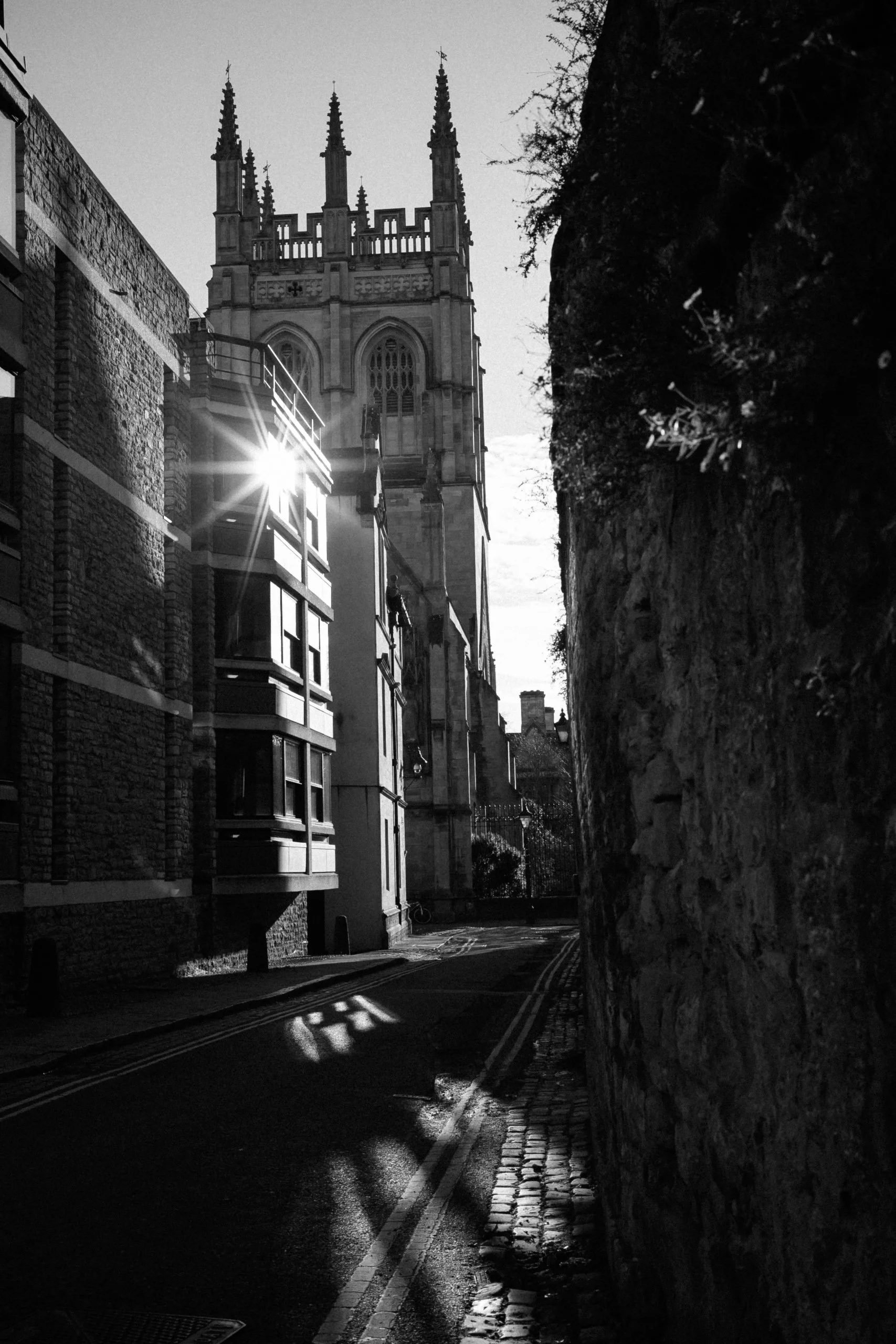
3) Winter sun down a narrow lane: Oxford doing Oxford things
The black and white lane shot is basically Oxford in one frame: stone, shadows, and that kind of light that feels like it’s only here for five minutes so you’d better not mess about.
The sunburst hitting the building gives it punch, but what really works is the way the street pulls you forward. You’ve got strong lines, texture, and contrast, and the 40mm perspective keeps it honest without feeling overly wide.
This is where the Zf’s handling really matters: when the light turns on, you want to react instantly, not negotiate with your camera.
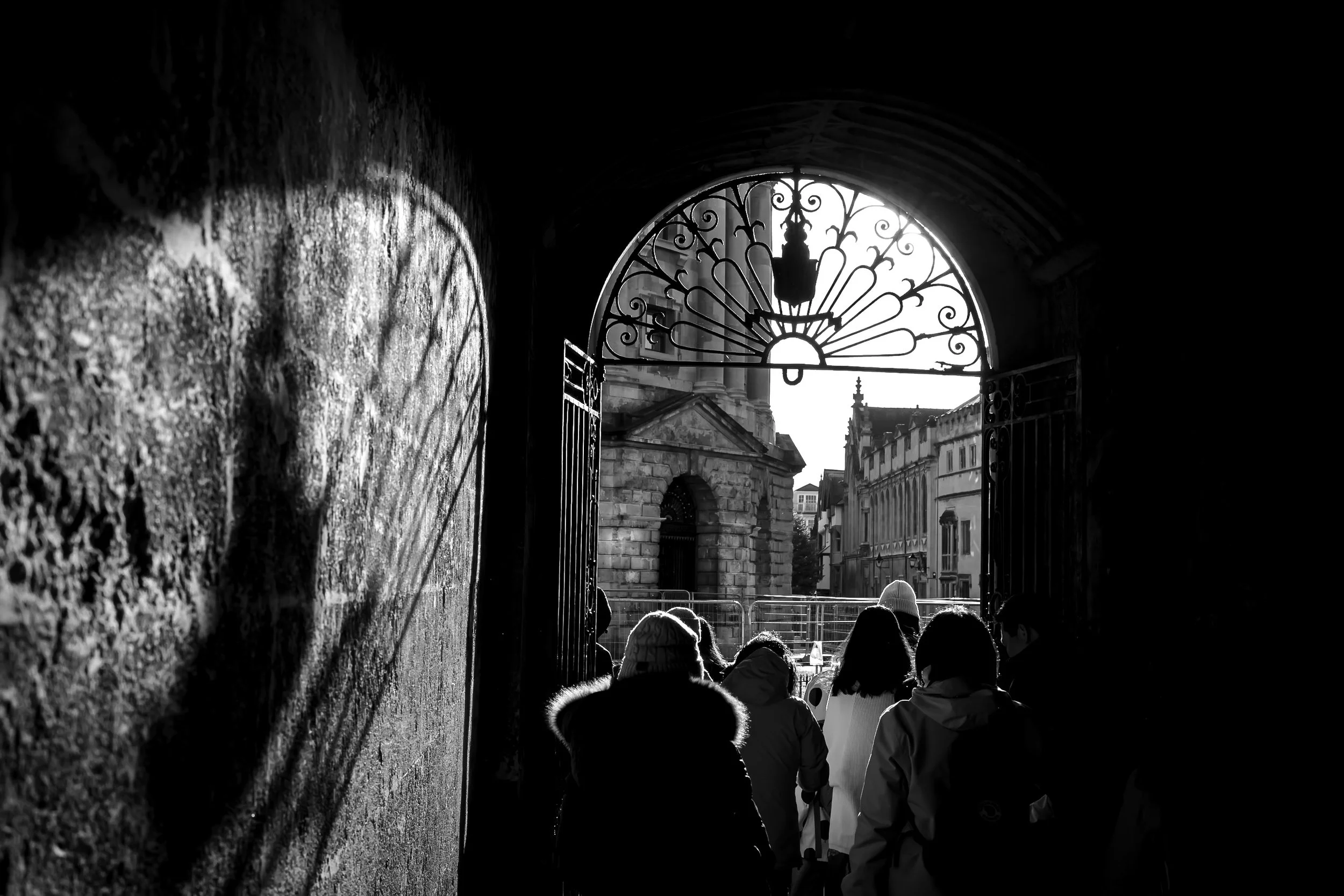
4) The archway: silhouettes and drama
That final black and white image has proper theatre to it. A bright exit framed by an ornate arch, deep shadows, and a cluster of people reduced to silhouettes.
Oxford is full of these transitions between dark and light, indoors and out, quiet and busy. Photographing them well is often about trusting the contrast and letting the shapes do the talking.
A manual focus lens encourages that. You’re not chasing the moment with endless autofocus decisions. You’re anticipating it, setting up, and letting people move through your frame like actors who didn’t realise they were booked.
How I’d shoot this setup in Oxford (practical settings that actually help)
Here’s a simple approach that suits the Zf + Voigtländer 40mm combo, especially in Oxford where light can flip from soft to brutal in half a street.
For daylight streets and lanes
Aperture: f/5.6 to f/8
Shutter: 1/250 or faster (1/500 if people are moving quickly)
ISO: Auto ISO with a sensible max you’re comfortable with
Focus: manual, pre-focused (or “zone-ish” focusing)
This keeps you fast and ready. Oxford has a lot of bicycles, tourists, and people turning corners at speed. A bit more depth of field saves you.
For windows, reflections, and interior scenes
Aperture: open up (f/1.4–f/2.8 depending on your lens)
Shutter: 1/125 or faster if hand-held, unless you’re leaning in and steady
ISO: let it climb
Focus: pick one layer (inside or reflection) and commit
With reflections, it’s tempting to try to make everything sharp. Usually the stronger photo happens when you choose the main layer and let the rest become atmosphere.
For archways and silhouette scenes
Expose for the highlights (the exit, the sky, the bright street)
Let the shadows go deep
Watch your edges and framing
Wait for the right spacing between people
These frames are basically graphic design with real life happening inside it.
Why this combo suits Oxford specifically
Oxford is a city of layers:
old and new architecture in the same frame
people moving through historic spaces like it’s totally normal
reflections everywhere
dramatic light bouncing off pale stone
The Nikon Zf keeps things tactile and quick. The Voigtländer 40mm keeps your framing natural and your images a little bit soulful.
And together, they do something important: they make you want to shoot.
That’s the real test. Not sharpness charts. Not online debates. Just whether you’ll actually take it out when the weather’s doing that classic Oxford thing where it’s sunny for 30 seconds then immediately emotionally manipulative.
Closing thoughts
If you’re shooting street photography in Oxford, the Zf and a 40mm manual lens are a brilliant pairing. You get enough flexibility to handle the city’s chaos, but enough constraint to keep you focused on what matters: light, timing, and story.
Also, it makes going out for “a quick walk” a bit of a lie, because you’ll keep finding reasons to take one more photo.
That’s not a problem. That’s the point.